Fact Finding 2026 Brussels
On 22 and 23 October 2026, a delegation of Austrian building and construction stakeholders travelled to Brussels for a Fact Finding Mission as part of the ReConstruct platform. The group brought together a wide range of perspectives: among them social housing experts, cement industry representatives, architects, representatives of the Association of Austrian Precast Concrete Manufacturers, Austrian Association for Building Materials and Ceramic Industries, and CEPS.
Over two days, we visited four places that, in their own way, are rethinking how we plan, build, test, reuse, and live in buildings. In between, we discussed the regulations and strategies that will shape the sector in the years ahead. Here is what we saw and what we took home.
Building on what is already there: bouwmeester maitre architecte
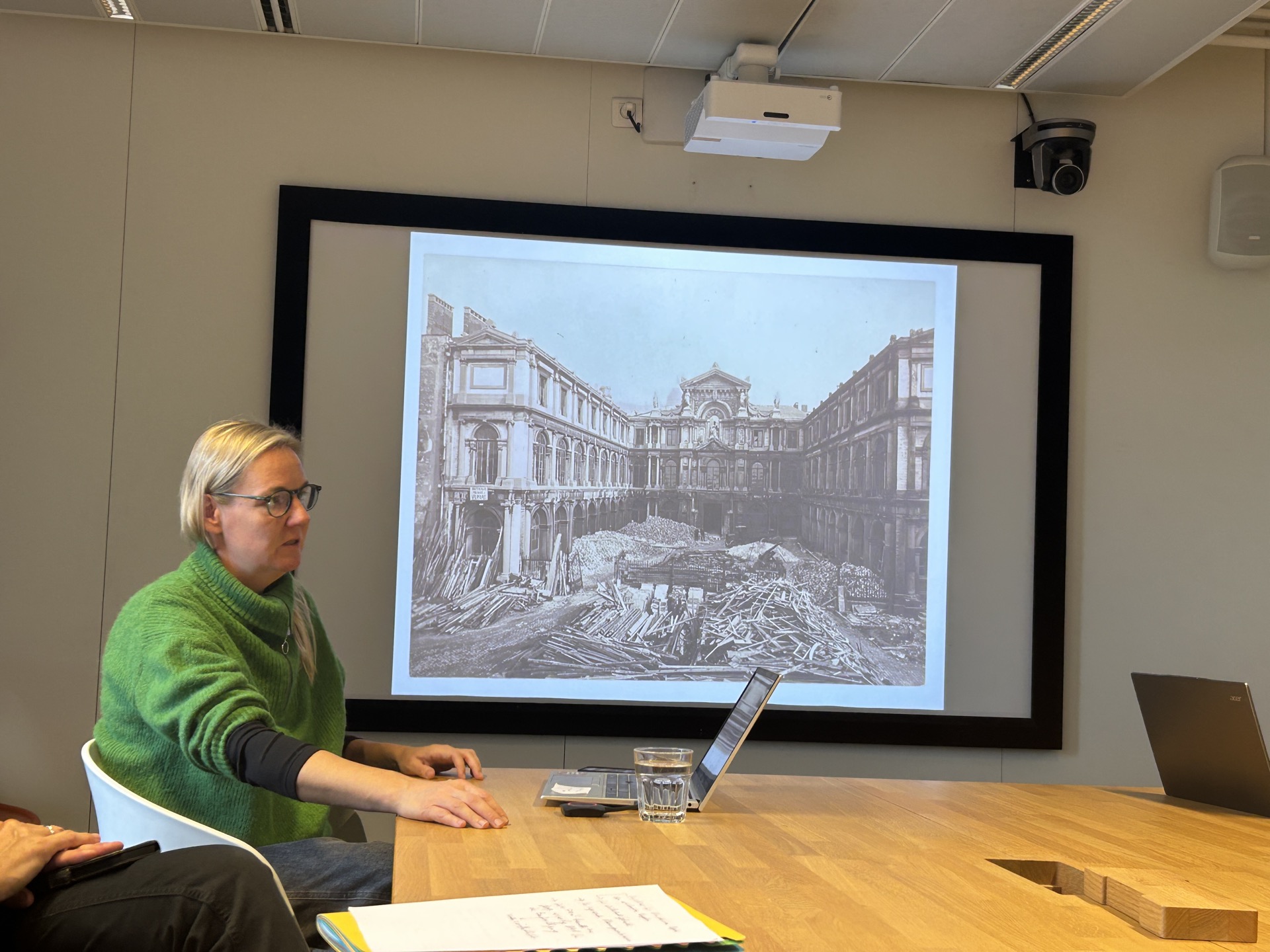
Our programme opened at the bouwmeester maitre architecte (BMA), the Brussels Region’s chief architect and its team. From an independent position, BMA works to raise the spatial quality of urban projects in the city. It does so through tools such as architecture competitions, research by design, and early advice to project developers. For the construction sector, BMA is an important gatekeeper: it shapes what gets built in Brussels, and increasingly, what does not get demolished.
That last point set the tone for the whole mission. BMA’s starting objective is to keep existing buildings. Its policies push for the reuse of buildings as a whole, and for the reuse of construction products where a building does have to change. Instead of asking “what new building should go here?”, the first question becomes “what can we do with what is already here?”
What struck the group most was how BMA works as an independent institution supporting the government. Rather than only checking private plans, it actively helps them succeed, while weaving in the city’s own urban planning goals. When BMA engages with a project, it might, for example, promote that part of it that is allocated to social housing, responding to the urgent need for affordable homes in Brussels. For the social housing experts in our delegation, this was a compelling example of how quality, sustainability and affordability can be negotiated within a single project.
A second lesson concerned long-term viability. BMA’s work does not depend on political support, and its funding is independent of political cycles. This gives it the continuity to pursue long-term goals, such as preserving the building stock, that rarely fit within a single legislative term.
A home for green businesses: Greenbizz and Buildwise
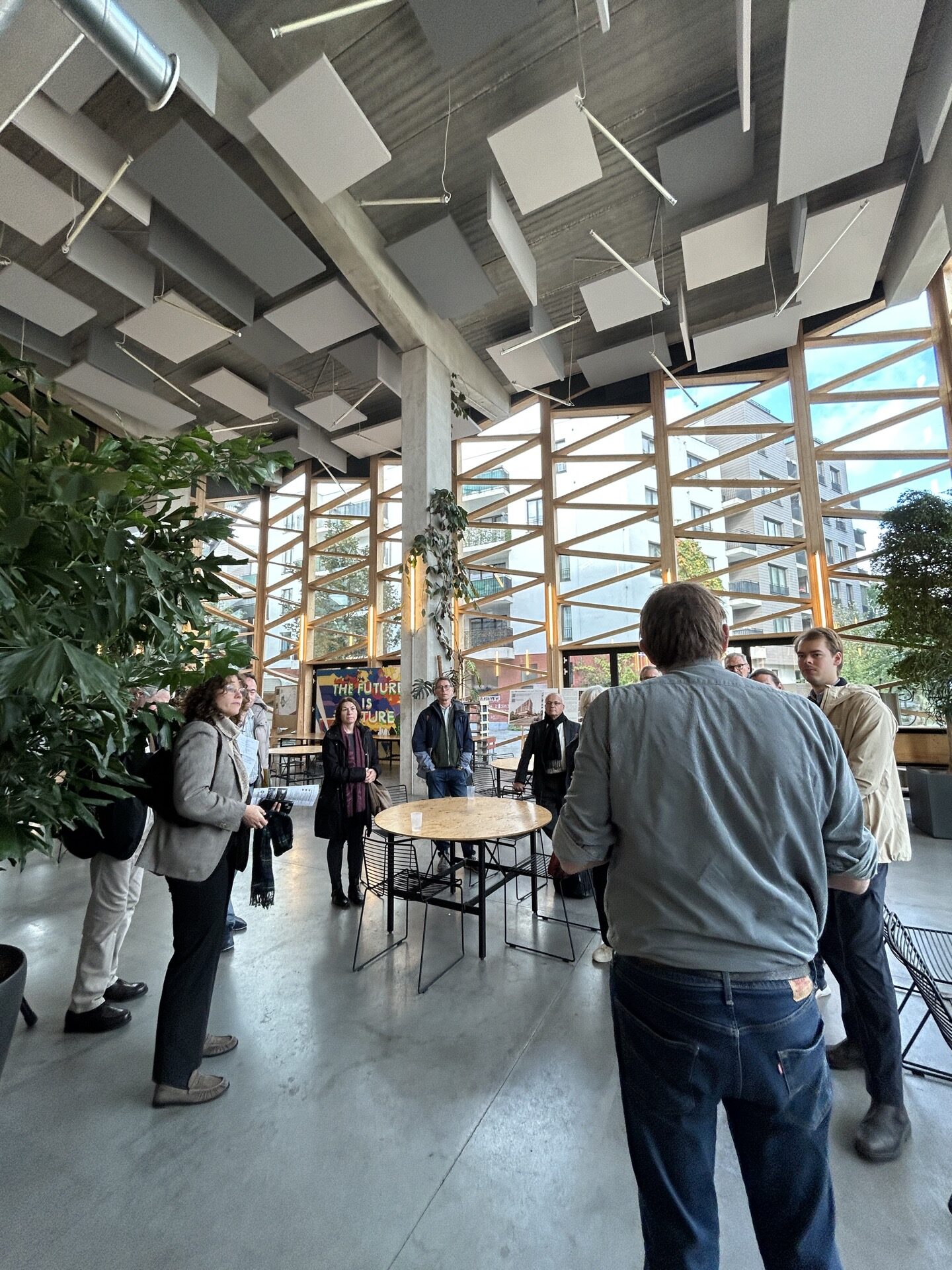
From there we went to Greenbizz, a Brussels hub that supports, connects and equips sustainable and circular businesses. It offers offices in a passive building alongside workshops built to low-energy standards. Many of its residents work in or around construction, from circular materials to sustainable building techniques. What makes it stand out is the combination of office and a large amount of workshop space under one roof in order to host companies that need both.
One of the organisations based at Greenbizz is Buildwise, and we visited them at their Brussels location. Buildwise is the innovation centre of the Belgian construction sector. Founded by the sector in 1959, it supports construction companies through research, technical advice and training, helping them improve quality, productivity and sustainability.
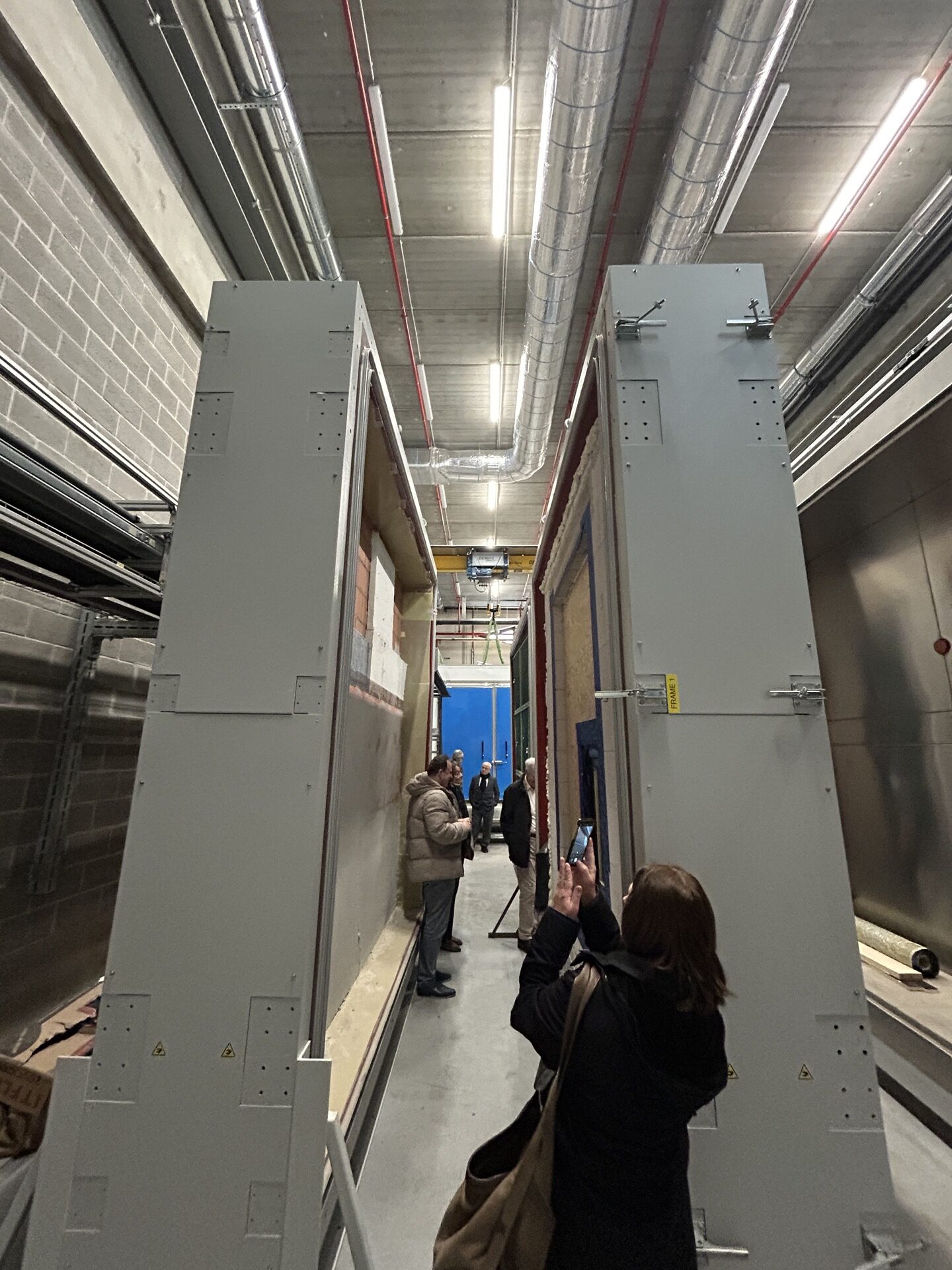
Their innovation centre was very impressive. The highlight was a machine that tests entire walls under different atmospheric conditions, one of likely only two of its kind in Europe. One chamber simulates the outdoor climate, the other the indoor climate, and a wall is placed between the two. Sensors then measure exactly what passes through the wall and what does not. Crucially, this also makes it possible to test walls built with reused or alternative materials.
We also saw other testing rooms, for example, to study the effect of salt on bricks, as well as machines and molds used to restore ornaments on monumental buildings. These testing facilities are essential for the CE marking of construction products. All in all, Buildwise helps companies in the sector to innovate, optimise their products and have them technically evaluated correctly: a vital bridge between new ideas and products that can actually reach the market.
Giving materials a second life: Rotor and Rotor Deconstruction
Our third stop brought us to substituting new products by reusing old ones. Rotor is a Brussels non-profit and cooperative design practice that investigates how our material environment is organised. Its sister organisation, Rotor Deconstruction (RotorDC), is a cooperative active since 2016 in dismantling, processing and selling reusable building materials and finishing elements, from doors and lighting to tiles, parquet and sanitary fittings. Together, they are making an impressive effort to turn the reuse of construction materials into everyday practice.
At RotorDC we learned about the practical side of running such a business: the obstacles and the business model of a company that tries to make a living out of dismantling, processing and selling building materials. The challenges are not only regulatory and practical. They are also cultural and architectural. Some materials carry a negative connotation among architects, for example, while a younger generation of architects is starting to appreciate those very same materials. Whether a salvaged product sells depends as much on taste and perception as on technical quality.
The non-profit Rotor takes more of an investigative approach. Since 2013, it has carried out practical experiments in the salvage and reuse of construction components, and it collaborates with architects to explore how circularity can be improved across the sector as a whole.
Once again, we saw that the construction market is very much a local one. Reused materials are found, processed and sold close to where they come from. This could make local ecosystems, like the one Brussels has built around BMA, Greenbizz, Buildwise and Rotor, all the more important.
Around the table: dinner discussions on European policy issues
After a day of seeing practice on the ground, the evening turned to the policy that frames it. Over dinner, the delegation had an engaging discussion on four key files: the Construction Products Regulation, the Energy Performance of Buildings Directive (EPBD), the European Affordable Housing Plan, and the Housing Construction Strategy.
The conversation touched on the changing requirements for construction products, and the tools to get there in the form of Digital Product Passports. We also explored the nexus of affordability, quality and sustainability in buildings: three goals that everyone shares, but that are not always easy to achieve at the same time. Finally, we discussed finance’s role in the buildings sector and how investment can be steered toward homes that are both sustainable and affordable. With different stakeholders all at the table, the discussion brought together exactly the mix of perspectives these questions need.
A glimpse of the future: Living Tomorrow
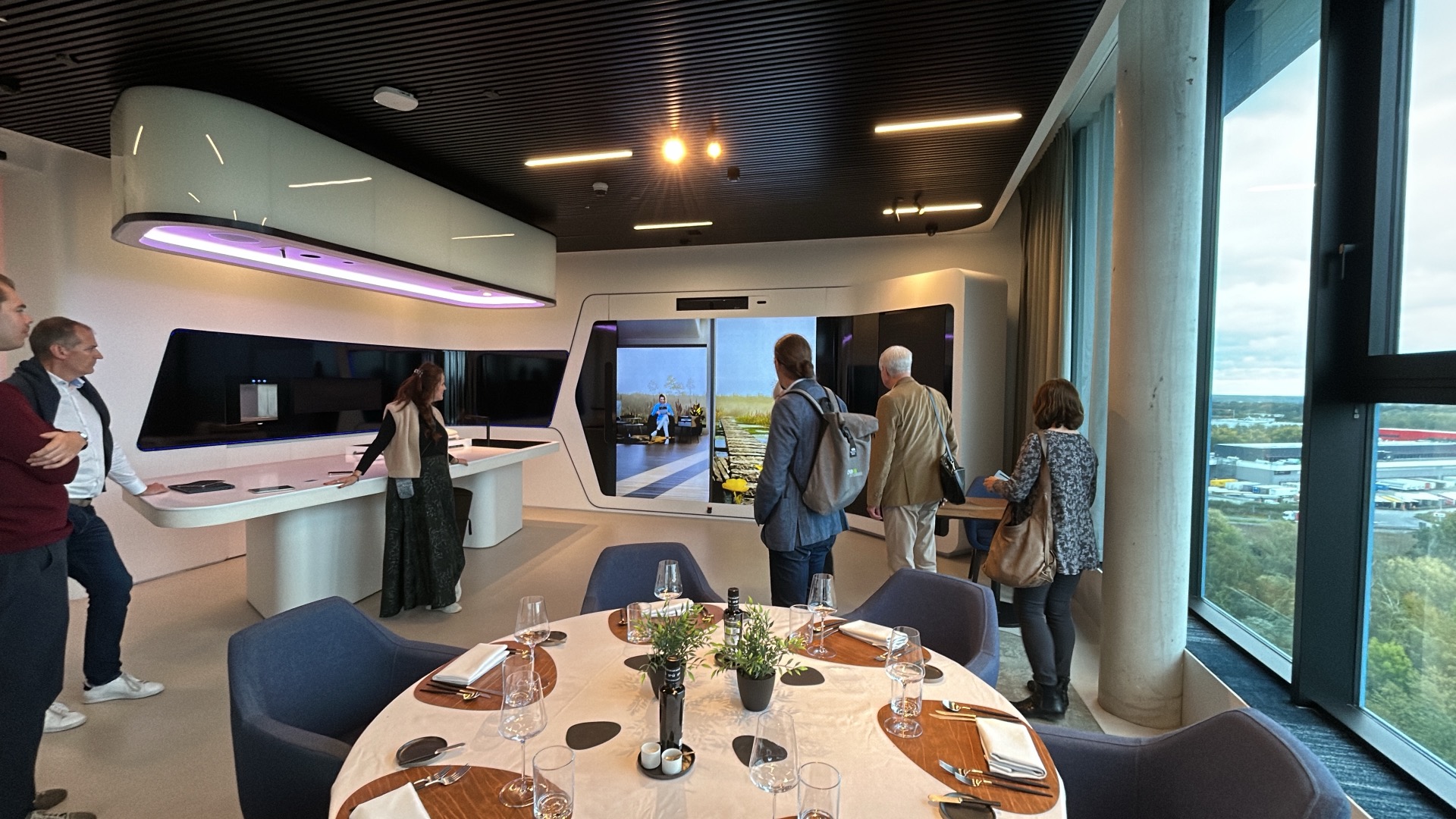
On the second day we visited Living Tomorrow, an innovation platform in Vilvoorde, just outside Brussels, that brings together more than 80 partners from business and government. Its Experience Center shows how innovations could shape the way we live, work and build, from circular buildings and smart homes to autonomous mobility. For the construction sector, it is a place to see where our homes and cities might be heading.
We were given an extensive tour of what the future could look like. The experience covered the role of technology in healthcare and at work, what our future homes might look like, and the growing role of robots, drones and smart systems in daily life. Most relevant for ReConstruct was the focus on smart and sustainable cities.
What sets Living Tomorrow apart is that it does not simply celebrate technology. It brings cultural and ethical questions to the forefront and invites visitors to think about where we do, and do not, want innovation in our lives. Those choices, our hosts stressed, are largely up to politicians and policymakers. Living Tomorrow’s role is to show what is possible.
What we take home
Across the four visits, a clear thread emerged: the most sustainable building is often the one that already exists, and its materials deserve a second life. Making that work takes more than good intentions. It takes public institutions with long-term continuity, like BMA; rigorous testing and certification, like Buildwise provides; viable business models and a shift in architectural culture, as Rotor shows; and a clear view of what future technology can and should do, as Living Tomorrow provides.
The mission also reminded us that construction remains a local business, even as the rules increasingly come from Europe. Connecting those two levels, local practice and European policy, is exactly what ReConstruct aims to do. We return to Austria with new ideas, new contacts, and plenty to discuss with our partners at home.
Finally, we would like to warmly thank Roland Zipfel from WKO for making this mission such a success.
Impressions